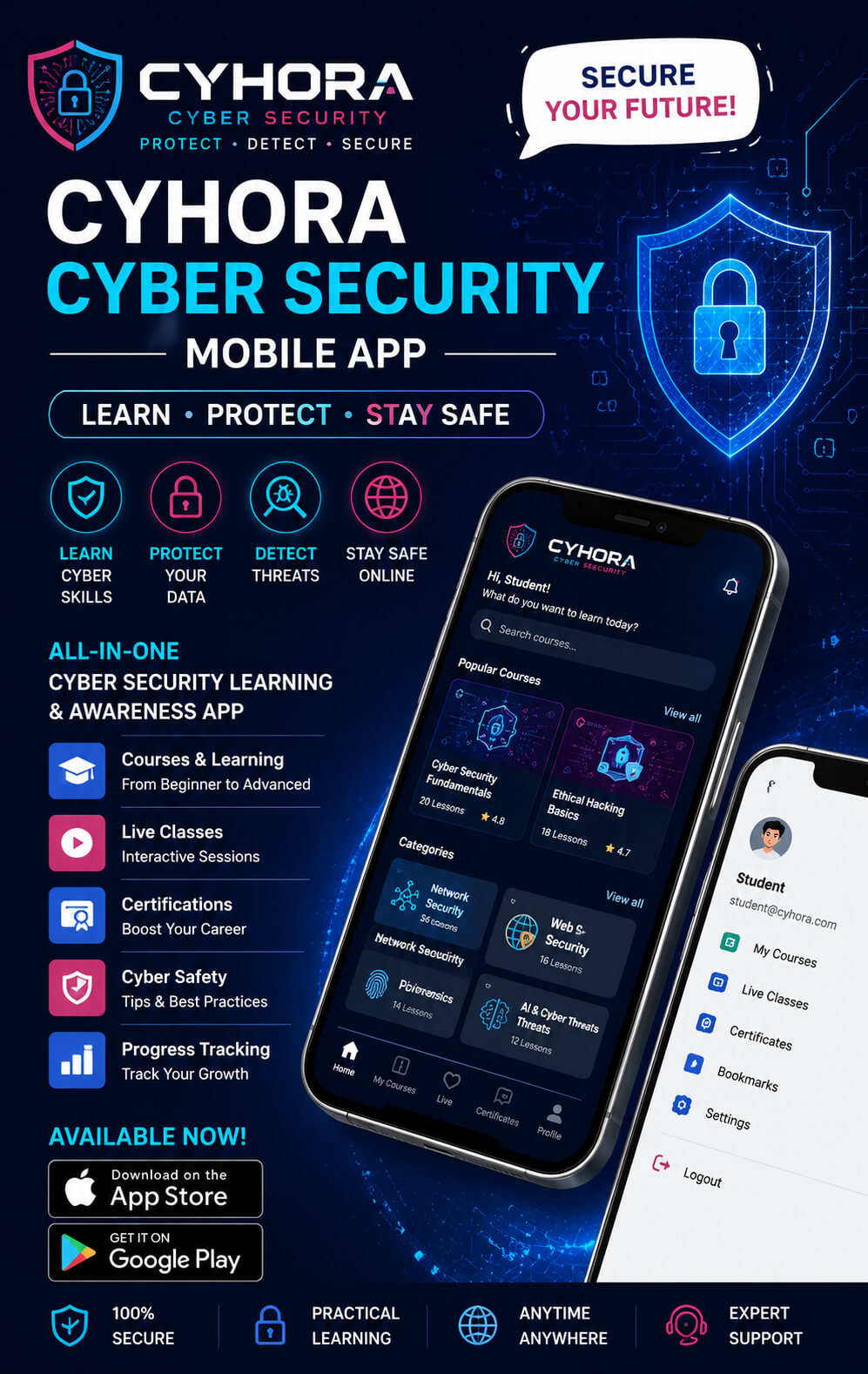

Learn cyber security fundamentals, online safety tips, password protection, scam prevention, and AI awareness in this beginner-friendly guide for students.
What is Cyber Security?
Cyber Security is the practice of protecting computers, mobile devices, websites, applications, and online accounts from cyber attacks, hackers, scams, viruses, and data theft.
In today’s digital world, students use smartphones, social media, online classes, gaming platforms, and AI tools every day. While technology offers many benefits, it also creates risks such as online scams, cyberbullying, identity theft, and fake websites.
Cyber Security helps students stay safe, protect their personal information, and become responsible digital citizens.
Why is Cyber Security Important for Students?
Students spend a significant amount of time online. They use:
- Social Media Platforms
- Online Learning Apps
- Gaming Websites
- Email Accounts
- AI Tools
- Digital Payment Apps
Without proper cyber safety knowledge, students may become victims of:
- Phishing Attacks
- Fake Links
- QR Code Scams
- Social Media Fraud
- Online Bullying
- Identity Theft
- Malware Infections
Cyber Security education helps students recognize threats before they become victims.
Common Cyber Threats Every Student Should Know
1. Phishing Attacks
Phishing is a cyber attack where scammers pretend to be trusted organizations and trick users into revealing passwords or personal information.
Example:
You receive an email claiming that your gaming account will be suspended unless you click a link immediately.
The link leads to a fake website designed to steal your login credentials.
How to Stay Safe
✔ Verify the sender
✔ Avoid clicking unknown links
✔ Check website URLs carefully
✔ Use two-factor authentication
2. Fake Links
Fake links are designed to look like legitimate websites.
Example:
Original Website:
www.google.comFake Website:
www.gooogle-login.comMany users fail to notice the difference and unknowingly provide sensitive information.
Safety Tips
✔ Check the spelling of website URLs
✔ Look for HTTPS security
✔ Avoid suspicious links shared on social media
3. QR Code Scams
QR codes are widely used for payments and information sharing.
Cybercriminals often replace genuine QR codes with fake ones.
When users scan these fake QR codes, they may:
- Lose money
- Share personal data
- Download malware
Safety Tips
✔ Verify QR codes before scanning
✔ Check payment details carefully
✔ Avoid scanning unknown QR codes
4. Social Media Scams
Scammers frequently create fake profiles and impersonate friends, celebrities, or organizations.
Common scams include:
- Fake giveaways
- Lottery scams
- Investment scams
- Scholarship scams
Safety Tips
✔ Never share OTPs
✔ Verify account authenticity
✔ Report suspicious profiles
5. Password Theft
Weak passwords are one of the biggest cyber security risks.
Bad Examples:
123456
password
qwerty
Strong Examples:
S@feStudent2026!Password Best Practices
✔ Use at least 12 characters
✔ Include numbers and symbols
✔ Use unique passwords
✔ Enable Multi-Factor Authentication (MFA)
Understanding Artificial Intelligence (AI) Risks
Artificial Intelligence is transforming education and technology.
However, cybercriminals also use AI for:
- Fake Voices
- Deepfake Videos
- AI Phishing Emails
- Fake Payment Screenshots
Students must learn how to verify information before trusting online content.
What are Deepfakes?
Deepfakes are AI-generated images, videos, or audio recordings that appear real but are actually fake.
Deepfakes can be used for:
- Misinformation
- Fraud
- Identity Manipulation
- Fake News
How to Identify Deepfakes
✔ Verify information from trusted sources
✔ Look for unnatural facial movements
✔ Cross-check videos and images
✔ Use fact-checking websites
Cyber Safety Tips for Students
Protect Personal Information
Never share:
- Passwords
- OTPs
- Bank Details
- Home Address
- School Information
Think Before You Click
Many cyber attacks begin with a single click.
Always verify:
- Links
- Attachments
- QR Codes
- Social Media Messages
Update Your Devices
Software updates often contain important security fixes.
Always keep:
- Smartphones
- Laptops
- Apps
- Browsers
updated to the latest versions.
Use Secure Wi-Fi
Avoid using public Wi-Fi for:
- Online Payments
- Banking
- Sensitive Activities
Report Cyber Incidents
If you encounter:
- Online Bullying
- Fake Profiles
- Scams
- Suspicious Messages
inform parents, teachers, or responsible adults immediately.
Benefits of Learning Cyber Security
Students who learn Cyber Security develop:
✔ Digital Awareness
✔ Problem-Solving Skills
✔ Responsible Online Behavior
✔ Scam Detection Skills
✔ Future Career Opportunities
Cyber Security is one of the fastest-growing industries globally and offers excellent career opportunities.
Career Opportunities in Cyber Security
Popular Cyber Security careers include:
- Cyber Security Analyst
- Ethical Hacker
- Security Consultant
- Digital Forensics Expert
- Penetration Tester
- Cloud Security Engineer
- Security Operations Center (SOC) Analyst
The demand for cyber security professionals continues to grow worldwide.
Learn Cyber Security with CCCSP
The CYVORA Certified Cyber Security Professional™ (CCCSP) program is designed to help students develop cyber safety awareness and future-ready skills.
CCCSP Foundation (Classes 6–8)
- Cyber Safety Fundamentals
- Password Security
- Scam Awareness
- Social Media Safety
- AI Safety
CCCSP Professional (Classes 9–12)
- Cyber Security Fundamentals
- Ethical Hacking Basics
- Network Security
- Digital Investigations
CCCSP Advanced (College Students)
- Penetration Testing
- Cloud Security
- Digital Forensics
- Security Operations
Conclusion
Cyber Security is no longer optional. Every student who uses the internet should understand how to protect personal information, recognize scams, and stay safe online.
By learning cyber safety skills early, students can confidently navigate the digital world and prepare for future opportunities in technology and cyber security.
Protect. Detect. Verify.
CYVORA SECURITY, SINGAPORE